


Something extraordinary happened in early 2025 when DeepSeek released V3: a model that matched GPT-4o’s performance across reasoning, coding, and multilingual benchmarks — built for a reported $5.6 million in compute costs compared to the hundreds of millions spent on comparable frontier models. The AI community treated this as an earthquake. If a team outside the San Francisco bubble could train a frontier-quality model at 1% of the cost, the narrative of “scale requires capital requires Big Tech” collapsed overnight.
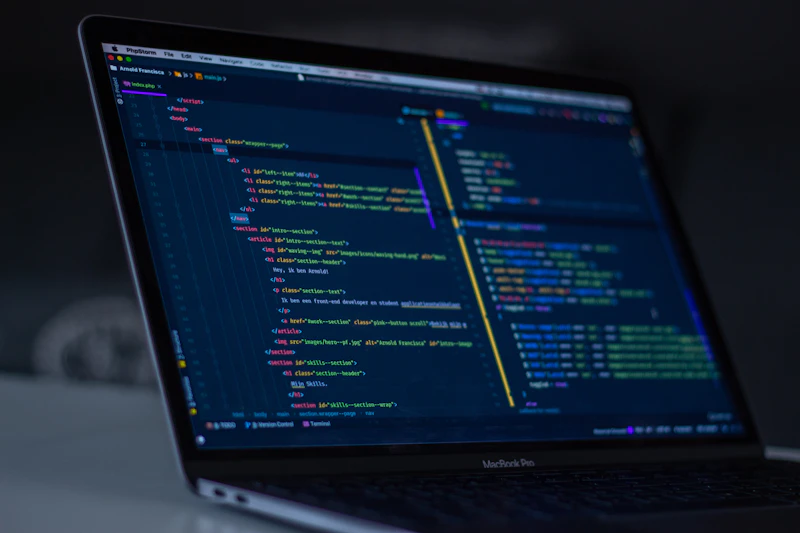
DeepSeek V3 is open-weight — the model weights are publicly downloadable. Organizations can run it on their own infrastructure, fine-tune it on proprietary data, inspect its behavior, and modify its architecture. This is not a minor technical detail. It is a fundamental shift in who controls AI capability and who benefits from it.
DeepSeek V3: The Technical Innovations Behind the Price Point
To understand why DeepSeek V3 was achievable at $5.6 million while comparable models cost ten to one hundred times more, you need to understand three architectural innovations the team published.
Multi-Head Latent Attention (MLA) reduces the memory required for the key-value cache during inference by 87.5% compared to standard multi-head attention. This dramatically reduces the GPU memory needed for long-context generation, which lowers inference costs at every scale.
Sparse Mixture of Experts (MoE) with fine-grained routing allows the model to have 671 billion total parameters while activating only 37 billion on each forward pass. This gives V3 the knowledge capacity of a 671B dense model at the inference cost of a 37B model. The DeepSeek team uses 256 expert modules with auxiliary-loss-free load balancing to ensure experts are utilized efficiently.
FP8 Mixed Precision Training — training at 8-bit floating point rather than the standard 16-bit — cuts memory usage and compute cost in half while preserving model quality. This required developing new FP8 quantization schemes and careful gradient management, but the result was a training run that was both cheaper and faster than standard approaches.
These are not tricks. They are genuine engineering innovations that other teams are now racing to adopt and extend.
The Open-Source AI Ecosystem Map
The open-source AI landscape in 2026 is rich and stratified. Understanding the ecosystem means knowing what you are choosing between.
Base Models — pre-trained on large corpora, not instruction-tuned. Best for: further fine-tuning on specialized domains. Examples: Llama 3.1 Base, DeepSeek V3 Base, Mistral 7B v0.1.
Instruction-Tuned Models — base models further trained on instruction-following datasets using RLHF or DPO. Follow natural language instructions reliably. Best for: most applications. Examples: Llama 3.1 Instruct, Phi-3 Mini Instruct, Qwen 2.5 Instruct.
Chat/RLHF-Optimized Models — specifically tuned for multi-turn conversation with human feedback. Best for: conversational applications, assistants. Examples: Llama 3.1 Chat, DeepSeek Chat.
Quantization Formats — compressed versions that trade a small amount of accuracy for large reductions in file size and inference cost:
- GGUF (llama.cpp format) — best for CPU + GPU hybrid inference on consumer hardware; the standard for Ollama
- GPTQ — GPU-optimized quantization, good for VRAM-constrained inference servers
- AWQ — Activation-Aware Weight Quantization; generally higher quality than GPTQ at the same bit width, emerging as the preferred format for production inference
- EXL2 (ExLlamaV2) — per-layer mixed-precision quantization; highest quality at aggressive compression ratios
Benchmark Reality: Where Open Models Stand in 2026
| Model | Params | MMLU | HumanEval | MATH | License |
|---|---|---|---|---|---|
| DeepSeek V3 | 671B (MoE) | 88.5% | 82.6% | 75.9% | MIT (weights) |
| Llama 3.1 405B | 405B | 87.3% | 72.6% | 73.8% | Llama Community |
| Qwen 2.5 72B | 72B | 86.1% | 85.4% | 83.1% | Apache 2.0 |
| Mistral Large 2 | 123B | 84.0% | 92.1% | — | Mistral Research |
| GPT-4o | ~200B est. | 88.7% | 90.2% | 76.6% | Closed |
| Claude Sonnet 4.6 | — | 88.3% | 92.0% | 71.1% | Closed |
The numbers are striking: open-weight models are within a few percentage points of the frontier on the most widely used benchmarks. For many production tasks — classification, extraction, summarization, code generation in common languages — DeepSeek V3 and Qwen 2.5 72B perform comparably to GPT-4o at a fraction of the API cost, with the additional advantages of data privacy and full control.
Deploying Open Models in Production
Ollama is the fastest path from zero to running a local model. Designed for developer laptops and small servers, it provides CPU+GPU hybrid inference with automatic model format management.
# Deploy DeepSeek-R1 distill (14B) with Ollama
ollama pull deepseek-r1:14b

# Expose as an OpenAI-compatible API
ollama serve  # defaults to http://localhost:11434

# Use with any OpenAI client
from openai import OpenAI
client = OpenAI(base_url="http://localhost:11434/v1", api_key="ollama")
response = client.chat.completions.create(
    model="deepseek-r1:14b",
    messages=[{"role": "user", "content": "Implement binary search in Python with tests"}]
)
print(response.choices[0].message.content)
vLLM is the production-grade inference engine for GPU servers. It implements PagedAttention for dramatically better GPU memory utilization and supports continuous batching to maximize throughput.
python -m vllm.entrypoints.openai.api_server
  --model deepseek-ai/DeepSeek-V3
  --tensor-parallel-size 8
  --max-model-len 32768
  --dtype float16
  --host 0.0.0.0 --port 8000
Together.ai and Replicate offer managed cloud inference for open-weight models — the best of both worlds when you need scale without owning GPU infrastructure. Together.ai runs Llama 3.1 70B at $0.88 per million tokens versus GPT-4o’s $10 per million input tokens — an 11× cost reduction at comparable quality for many tasks.
Fine-Tuning Open Models on Your Data
from unsloth import FastLanguageModel
from trl import SFTTrainer
from transformers import TrainingArguments
from datasets import load_dataset

model, tokenizer = FastLanguageModel.from_pretrained(
    model_name="unsloth/Meta-Llama-3.1-8B-Instruct-bnb-4bit",
    max_seq_length=4096,
    load_in_4bit=True,
)

model = FastLanguageModel.get_peft_model(
    model, r=16, target_modules=["q_proj", "v_proj", "k_proj", "o_proj"],
    lora_alpha=16, lora_dropout=0, bias="none", use_gradient_checkpointing="unsloth"
)

dataset = load_dataset("your_org/your_dataset", split="train")

trainer = SFTTrainer(
    model=model,
    tokenizer=tokenizer,
    train_dataset=dataset,
    dataset_text_field="text",
    max_seq_length=4096,
    args=TrainingArguments(
        per_device_train_batch_size=2, gradient_accumulation_steps=4,
        warmup_steps=5, max_steps=100, learning_rate=2e-4,
        fp16=True, output_dir="outputs", optim="adamw_8bit",
    ),
)
trainer.train()

# Save merged model (base + LoRA weights)
model.save_pretrained_merged("fine-tuned-llama-3.1-8b", tokenizer, save_method="merged_16bit")
The Open-Source AI Community
Open-source AI is not just a technical ecosystem — it is a community with distinct cultures, values, and collaborative norms that matter for anyone building a career in this space.
Hugging Face is the central platform: the “GitHub of AI” for model hosting, dataset sharing, and collaborative development. The Model Hub hosts over 900,000 models as of mid-2026. The Spaces feature provides free hosting for ML demos. Contributing to popular Hugging Face repositories or maintaining a high-quality model card is now a legitimate career credential.
EleutherAI is the community that proved open-source could match frontier labs. They trained GPT-J, GPT-NeoX, and Pythia — academic-scale models with fully public training code, datasets, and evaluation infrastructure. Their commitment to reproducibility and open science has influenced how even commercial labs think about transparency.
LAION built the large-scale open datasets — LAION-5B, LAION-400M — that enabled the open-source image generation revolution. Creating and curating open datasets is one of the highest-leverage contributions to the ecosystem, and it is often undervalued relative to model training.
Licensing: What “Open Source” Actually Means
Not all “open” models are equally open. Understanding licensing is essential before deploying or building on an open model.
Apache 2.0 (Qwen 2.5, many smaller models): Truly open. Commercial use, modification, and redistribution allowed. No restrictions on use case. The most permissive and business-friendly license.
MIT (DeepSeek V3 weights, many fine-tunes): Essentially equivalent to Apache 2.0 for practical purposes. Allows unrestricted use including commercial.
Llama Community License (Llama 3.x): Allows commercial use but requires attribution and restricts use for training competing frontier models. Also has user count thresholds — applications serving over 700 million monthly users must request a special license from Meta.
Research-Only Licenses (some Mistral models, older academic releases): Prohibit commercial use. Cannot be deployed in production products.
The open-source AI movement is not an accident of altruism. It is the result of deliberate choices by researchers, companies, and communities who believe that concentrated control over general intelligence is a risk to the world. For engineers who want to build careers that create broad benefit — rather than reinforcing existing power structures — this is where the most interesting and consequential work is happening.


